Avoid the 10 most common SEO mistakes
The summer holidays are over and autumn is just around the corner, which means it’s high time to review your company’s SEO again. Because even if you’ve worked on search engine optimisation before, it’s easy to get stuck in old ways of working, and what worked a few years ago may not necessarily be what delivers the best results today.
Below, we look at 10 common SEO mistakes that many businesses still make, and how they can easily be avoided:


1. Does not tailor the content to suit both people and AI search tools
Google and AI are getting better and better at understanding users’ needs. This applies whether the user is a human or a bot searching for specific information. Companies therefore need to give more thought to the visitor by creating content that is relevant and easy to understand for people, search engines and AI-powered search tools alike.
2. Creating content without a clear search intent
What is it, really, that the user is looking for when they search for a particular word? This is one of the most important questions in SEO. A company may have a perfectly optimised page for a relevant keyword but still fail to rank, because the content does not match what the user (whether a human or an AI search tool) is actually looking for.
3. Publishes text generated entirely by AI, without any editorial editing
AI is an effective tool for text production, but that does not mean that texts can be published completely unedited. Content that lacks personal experience or expertise is likely to be filtered out. It is therefore important that people are always responsible for quality, perspective and editorial processing.
4. Forgetting to include internal links and guide the visitor
A page with good content is of no use if it cannot be found on the website. Internal links make it easier for both users and search engines to understand how the different parts of the website are connected. Well-planned internal linking and guidance via “read more” pages can also help important pages gain greater visibility.
5. Has too many thin pages
Having more pages does not automatically mean better SEO. Many websites consist of a large number of pages that contain very little information or overlap with one another. This can make the website harder to understand and lead to the pages competing with each other in search results. Sometimes it is better to improve, merge or remove content than to keep producing new content.
6. Lacks clearly identified authors and experts
Who is actually behind the text? For many topics, it is important to make it clear what expertise and experience the content is based on. Companies that clearly identify their experts, writers and sources can both build greater trust with visitors and create more credible content.
7. Optimises solely for Google
As seodr.® has written about previously, visibility on Google remains important, but people’s search behaviour has changed. AI tools such as ChatGPT, Gemini and Copilot have become the go-to way for finding both information and businesses. That’s why businesses need to think more broadly about their digital visibility and create content that not only ranks in traditional search engines, but also has the potential to be seen and recommended in AI-driven searches.
Please do read more about changes in search behaviour in our article AI tools have taken over the B2B market.
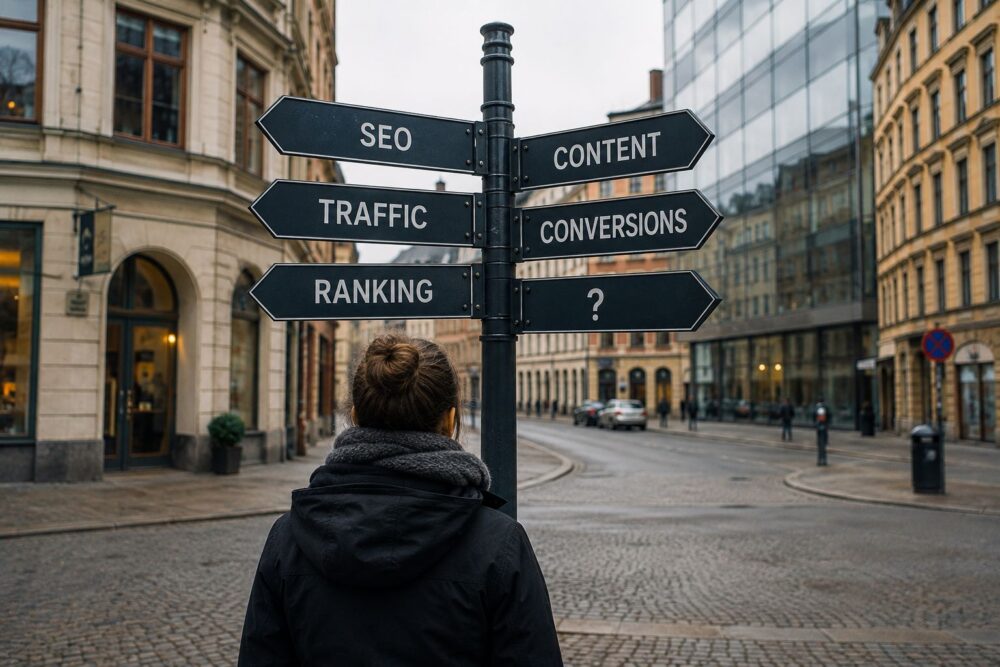
8. Ignores the brand
SEO isn’t just about keywords. A strong brand can influence how people search, click and choose between different companies. That’s why SEO and brand building need to go hand in hand. The aim isn’t just to attract a visitor from Google – it’s to get the right person to choose your company in particular.
9. Measures traffic only
Thousands of visitors sounds good on paper. But what is that traffic worth if nobody contacts the company, sends a request for a quote or makes a purchase? The SEO strategy should be linked to the company’s actual objectives. These might include leads, sales, bookings or other conversions. Only then can you see whether SEO is actually delivering business value.
10. Focuses on rankings rather than business results
Once again – ranking number one on Google isn’t the main goal in itself. What matters is what that ranking actually leads to. Of course, a good ranking significantly increases the likelihood of a purchase, but a keyword may have a high search volume yet be completely irrelevant to the company’s business, whilst a less popular keyword may generate customers with a high purchase intent.
Time to get back to SEO after the holidays?
Autumn is a good time to take a step back and review how your company’s website is actually performing. Which search terms do you rank for? Which pages are generating business? Where are you losing potential customers? And what are your competitors doing better?
At seodr.®, we approach SEO based on your company’s objectives, search behaviour and data. We analyse the current situation, identify opportunities and develop a long-term strategy to increase both visibility and conversions. SEO is an ongoing process, and with the right strategy, it is an investment that will continue to deliver results for many years to come.
Please feel free to get in touch and we’ll take a look at what could be improved on your website!
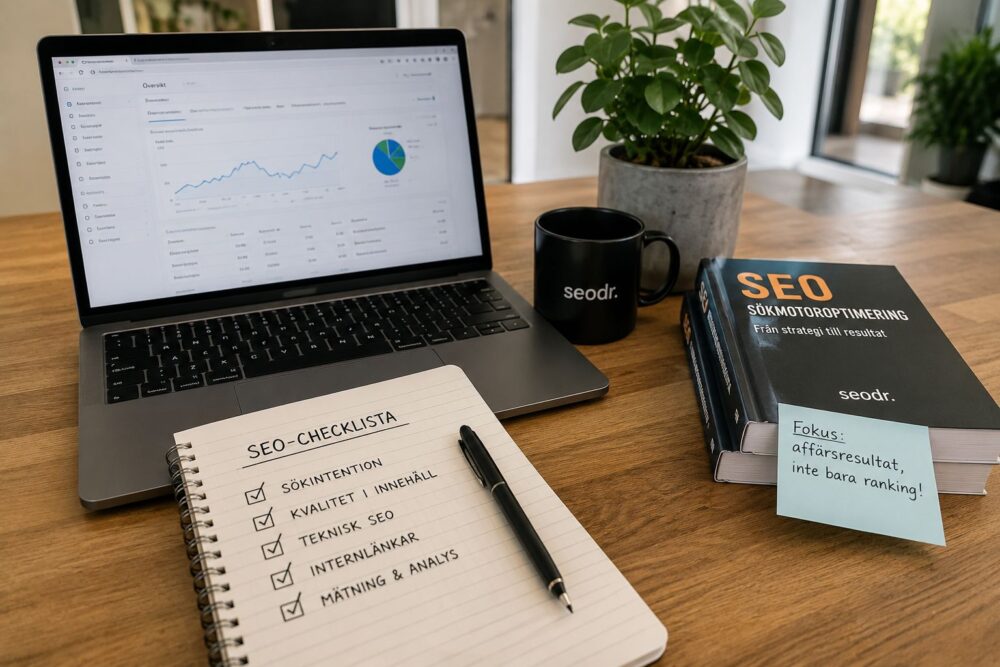
Do you need help with SEO on your website?
Contact us at seodr.® and we will guide you through the new ways of searching for information.